Uncategorized
Highest THC Strain: Which Cannabis Strains Are Really the Strongest?
Aug
When people search for the highest THC strain, they are usually looking for a cannabis cultivar associated with exceptionally high THC potency. Names such as GSC, Bruce Banner, Ghost OG, Gorilla Glue and newer high-potency cultivars frequently appear in discussions about the strongest cannabis strains.
However, there is an important distinction between a strain’s reputation for potency and the actual THC concentration found in a particular batch of flower. There is no permanent, scientifically established “strongest strain in the world” because THC levels can vary substantially between cultivars, growers, harvests, phenotypes, laboratories and testing methods.
Recent research has also demonstrated considerable variation between labelled and independently measured THC levels. In one peer-reviewed study of 23 cannabis samples, independently measured THC was, on average, 23.1% lower than the lowest labelled value and 35.6% lower than the highest labelled value.
For European cannabis consumers researching potency, this makes laboratory information and batch-specific testing more meaningful than simply choosing a strain because it has a reputation for being exceptionally strong.
What Does “Highest THC Strain” Actually Mean?
THC, or delta-9-tetrahydrocannabinol, is the primary intoxicating cannabinoid found in cannabis.
When flower is described as containing 25% THC, the percentage refers approximately to the proportion of total flower weight represented by THC under the relevant testing methodology. It does not mean that every bud from that cultivar will contain exactly 25% THC.
This distinction matters because cannabis is a biological product.
Two plants carrying the same strain name can produce different cannabinoid concentrations. Even different parts of the same plant can vary.
A 2025 study examining commercially relevant THC-dominant cannabis cultivars found meaningful variation within individual batches and between plants of the same cultivar. The researchers reported within-batch ranges of approximately 3.1% to 6.7% of actual THC content across the cultivars examined.
Consequently, asking which strain has the highest THC is more complicated than producing a simple permanent ranking.
Which Cannabis Strains Are Known for High THC?
Several established cultivars have become particularly associated with high THC potency.
GSC — Girl Scout Cookies
GSC, also known as Girl Scout Cookies or Cookies, is one of the best-known high-THC cannabis cultivars.
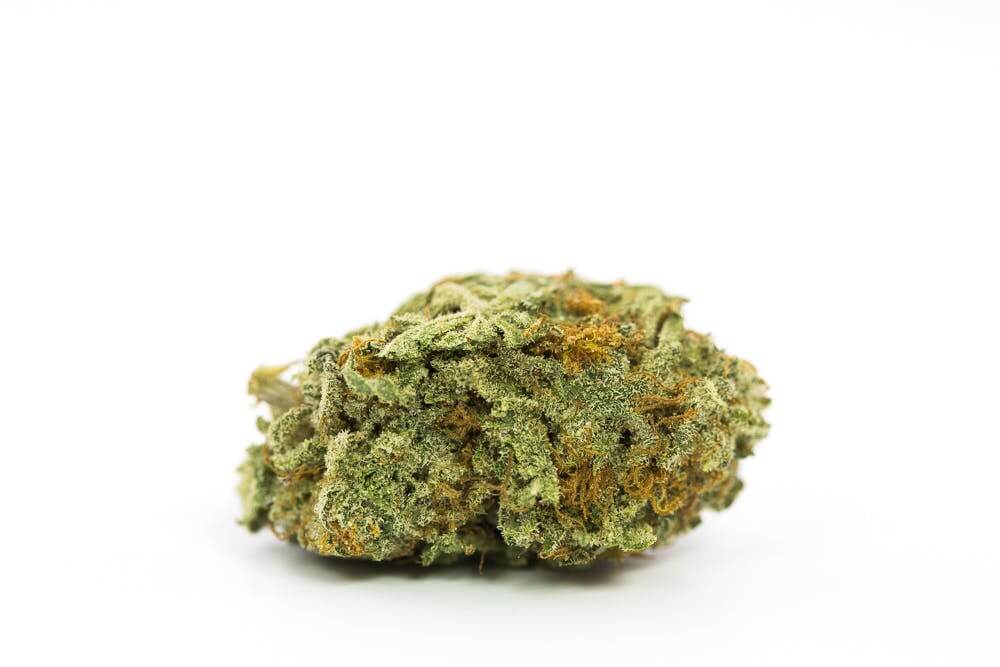
Leafly currently lists GSC at around 25% THC, describing it as a hybrid with sweet, minty and earthy characteristics. Its reported dominant terpenes include caryophyllene, myrcene and limonene.
GSC is particularly interesting because it demonstrates why strain names alone should not be used to predict exact potency. Different GSC phenotypes and products can have different cannabinoid profiles.
The cultivar has also produced several related lines, including Thin Mint and Platinum GSC, which are sometimes discussed separately.
Bruce Banner
Bruce Banner is another famous high-potency hybrid.
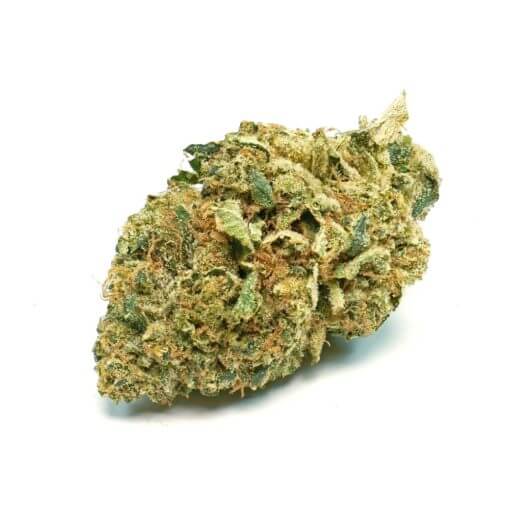
Leafly currently lists the cultivar at approximately 21% THC, with caryophyllene, myrcene and limonene among its reported dominant terpenes. Its flavour profile is described with floral, tea and diesel notes.
Bruce Banner has developed a reputation for strong effects, but the commonly quoted THC figure should be treated as a reference rather than a guaranteed number for every batch.
Ghost OG
Ghost OG is particularly notable when discussing historical laboratory data.
An analysis published by Leafly found that Ghost OG had an average THC content above 28% in the dataset examined, making it the highest-average strain in that particular dataset. The same analysis reported lower averages for several well-known cultivars, including Blue Dream, GSC, Sour Diesel and OG Kush.
This is an important example of why the wording matters.
It is accurate to say Ghost OG recorded a very high average in that particular dataset. It would be inaccurate to conclude that Ghost OG is permanently the highest-THC strain available everywhere.
Gorilla Glue and Related Glue Cultivars
Gorilla Glue genetics are also frequently associated with high potency.
Different members of the Glue family can have different cannabinoid profiles. For example, Leafly currently lists GG5, also known as Gorilla Glue #5 or New Glue, at around 24% THC.
Other Glue descendants can test differently, making it important to identify the specific cultivar rather than simply referring to something as “Gorilla Glue.”
Gorilla Cookies
Gorilla Cookies is another hybrid associated with high potency.
Leafly currently lists Gorilla Cookies at approximately 21% THC and identifies caryophyllene, limonene and myrcene among its dominant terpenes.
Its genetics combine Gorilla Glue #4 and Thin Mint Girl Scout Cookies, giving it a lineage that connects two well-known high-potency families.
Are 30% THC Strains Real?
Cannabis flower with reported THC concentrations around or above 30% does appear in modern markets and breeding programmes.
However, claims about extremely high THC flower deserve careful scrutiny.
A 2026 review from Royal Queen Seeds, for example, discusses cultivars with reported or breeder-stated THC potential reaching the high-20% range and notes that some Royal Gorilla phenotypes can reach above 30%.
But a breeder’s maximum potential is not equivalent to a laboratory-confirmed result for every commercial batch.
This distinction is essential:
“Up to 30% THC” does not mean every sample contains 30% THC.
It can refer to an exceptional result under particular growing and testing conditions.
Why THC Percentages Vary
There are several reasons why the same strain can produce different THC results.
Genetics
Genetics establish much of a plant’s potential cannabinoid profile.
Two cultivars can have very different THC-producing potential, while different phenotypes of the same cultivar can also behave differently.
Growing Conditions
Light intensity, temperature, humidity, nutrition and other cultivation conditions can influence plant development.
The goal isn’t simply to maximise THC. Healthy plant development and proper maturation are important factors in producing consistent cannabis.
Harvest Timing
Cannabinoid concentrations can change as flowers mature.
Harvesting too early or too late can produce a different cannabinoid profile from the same genetic line.
Drying and Curing
Post-harvest handling also matters.
Cannabis flower loses moisture during drying, meaning the relative concentration of cannabinoids can change as the product reaches its final moisture content.
Testing Laboratory
Laboratory methodology can make a significant difference.
Research has identified substantial inter-laboratory variability in reported cannabinoid concentrations. One large analysis of Washington cannabis testing data found persistent differences between laboratories even after controlling for factors such as strain, producer and testing period.
This is one reason a number printed on packaging shouldn’t automatically be treated as an absolute scientific value.
Why a Higher THC Percentage Doesn’t Tell the Whole Story
THC percentage is useful, but it is not the complete description of cannabis.
Two flowers with similar THC percentages can have noticeably different chemical profiles.
One may contain higher amounts of limonene, another more myrcene or caryophyllene, while minor cannabinoids can also differ.
The overall profile is sometimes described through the concept of the entourage effect, although scientific understanding of interactions between cannabinoids and terpenes remains an active area of research.
For consumers comparing cannabis strains, it can therefore be useful to look at:
- THC concentration
- CBD concentration
- Other reported cannabinoids
- Terpene profile
- Cultivar genetics
- Batch information
- Laboratory testing
- Harvest or production information where available
The Strongest Strain Isn’t Necessarily the Best Strain
The phrase “strongest cannabis strain” can make it sound as though the highest THC percentage automatically represents the best product.
That isn’t necessarily the case.
A person interested in cannabis may care about flavour, aroma, genetics, terpene composition, CBD content, cultivation quality or consistency just as much as THC concentration.
For example, someone interested in citrus-forward profiles may prefer a cultivar with a particular terpene combination even if another strain has a higher THC number.
Likewise, someone comparing products from different producers may value a transparent laboratory report over an impressive number printed on a marketing label.
How to Compare High-THC Cannabis More Reliably
If you’re researching high-THC cannabis in Europe, consider looking beyond the strain name.
1. Look for batch-specific testing
A laboratory report connected to the actual batch is much more informative than a generic statement about the cultivar.
2. Check total THC carefully
Some laboratories report THC and THCA separately, while others provide calculated total THC.
Understanding what the number represents prevents misleading comparisons.
3. Compare like with like
Comparing a flower’s THC percentage with a concentrate’s percentage isn’t meaningful.
Concentrates naturally contain much higher cannabinoid concentrations because much of the plant material has been removed.
A recent study of commercial cannabis products illustrates this difference: the median labelled THC concentration for concentrates was approximately 74%, compared with approximately 23% for flower in the study sample.
4. Look at the whole cannabinoid profile
THC is only one component of cannabis chemistry.
5. Consider testing reliability
Independent research has found discrepancies between labelled and observed THC concentrations, particularly for flower. A 2025 study of 277 products found that 56.7% of flower samples fell within ±15% of their labelled THC concentration, compared with 96% of concentrates in that study.
That doesn’t mean every product label is inaccurate. It means consumers should interpret exceptionally high THC claims with appropriate caution.
High-THC Strains vs High-THC Products
Another important distinction is between a strain and a product.
A strain is a genetic lineage or cultivar.
A product is a particular commercial preparation made from that material.
A flower product might contain 24% THC, while an extract made from the same genetic material could have a dramatically different concentration.
Therefore, saying that a strain is “30% THC” doesn’t automatically mean that every product carrying that strain name will contain 30%.
This is especially important when reading online product descriptions.
Can Cannabis Flower Really Reach 30% THC?
Yes, flower can be reported at very high THC percentages, including results around 30% in some markets.
But extremely high numbers should be viewed as batch-specific measurements rather than permanent characteristics of a strain.
Scientific research has demonstrated both natural variation within cannabis plants and differences between laboratory results.
As a result, a better question is:
Which specific cannabis batch has the highest independently verified THC concentration?
That is a much more scientifically meaningful question than asking which strain name is the strongest.
What European Consumers Should Know
Cannabis laws differ substantially across Europe.
THC-containing cannabis products are not governed by one universal European consumer framework, and the legal status of cannabis can vary between countries and product categories.
For that reason, consumers should check the laws that apply in their own country rather than assuming that a product legal or regulated in one European market is automatically legal elsewhere.
This is particularly important when researching THC flower, concentrates, tinctures and vape products, because these product categories can be subject to different rules.
Consumers should also distinguish between industrial hemp/CBD products and products containing intoxicating levels of THC. Similar terminology can sometimes make these categories appear closer than they actually are from a regulatory perspective.
So, What Is the Highest THC Strain?
There isn’t one definitive answer.
Ghost OG has historically appeared at the top of specific laboratory datasets, with Leafly reporting an average above 28% THC in one dataset.
Modern breeding programmes also produce cultivars that are marketed or reported in the high-20% range, with occasional claims above 30%.
GSC, Bruce Banner, Gorilla Glue-related cultivars and Gorilla Cookies are among the better-known names associated with high THC, but their actual potency varies by phenotype, cultivation, batch and testing methodology.
Therefore, there is no reliable permanent ranking such as “strain X is number one forever.”
The most accurate way to identify exceptionally potent cannabis is to look at recent, batch-specific laboratory testing.
Frequently Asked Questions
What is the highest THC strain?
There is no universally confirmed highest-THC strain. Ghost OG recorded an average above 28% THC in one historical laboratory dataset, while modern cultivars can produce reported results approaching or exceeding 30% under particular conditions.
Is 30% THC flower possible?
Yes. Flower with reported THC concentrations around 30% exists, although exceptional figures should be interpreted as batch-specific rather than guaranteed characteristics of every plant carrying that strain name.
Is GSC a high-THC strain?
Yes. GSC is widely regarded as a high-THC cultivar, with Leafly currently listing it at approximately 25% THC. Actual results can vary between products and batches.
Does the same strain always have the same THC percentage?
No. Genetics provide a foundation, but cultivation conditions, phenotype, harvest, processing and laboratory methodology can all contribute to variation. Research has demonstrated measurable THC variation even within plants from the same cultivar.
Is higher THC always better?
No. THC percentage is only one characteristic of cannabis. Terpenes, minor cannabinoids, flavour, aroma, genetics, product quality and consistency can also be important when comparing cultivars.
How can I verify a cannabis product’s THC level?
The most useful information is a recent laboratory report or certificate of analysis associated with the specific batch. A generic strain description or maximum advertised percentage is less reliable than batch-specific analytical data.
Final Thoughts
The search for the highest THC strain reflects how much cannabis breeding and cultivation have changed over the years. Modern cultivars can reach THC concentrations that would have been considered exceptional in earlier generations.
However, the most important lesson is that strain names are not laboratory results.
GSC, Bruce Banner, Ghost OG, Gorilla Glue-related cultivars and other high-potency genetics can all produce impressive THC numbers, but the result depends on the particular plant, phenotype, cultivation process, harvest and testing method.
For anyone researching cannabis potency, a sensible approach is therefore to look beyond claims of “the strongest strain” and examine reliable, batch-specific laboratory information.
That provides a much more realistic picture of THC potency and helps separate established data from marketing claims.
